Disgressions about Exile, Reason and Literature
Disgression I: On Exile and Reason
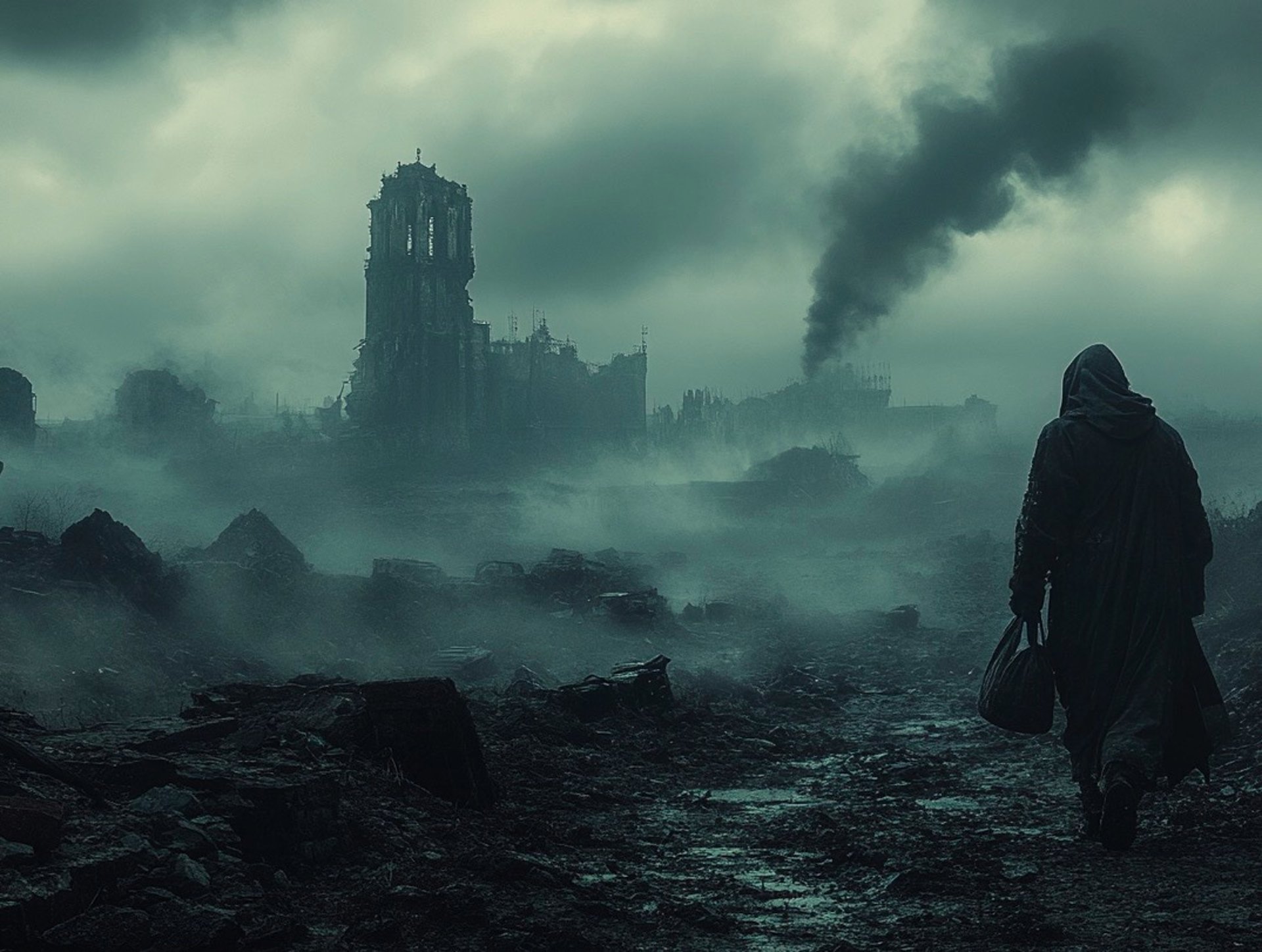
Writing about exile in a world of exile is undoubtedly writing about our time. Speaking about art or literature in a positivist and war-torn world is not speaking about our time. (Art and literature, regardless of their historical unfolding, belong to a timeless realm; they exist in that moment of internal movement within the human being, which lies beyond history and where history merely provides the accidental framework for what already pre-exists.)
But this is not about preaching or expressing a general thought on the universality of exiles. The purpose of these sketches of ideas, mediated by the category of reason, is to express, to some extent, the universe of exile and that of literature as grasped through the concept of reason. This does not prevent literature and exile, at certain moments, from taking entirely independent paths.
Neither would it be possible for me to speak simply of reason without making any statement about it. Reason, understood as an exercise that acts and becomes, as an activity that unifies knowledge of both intellect and feeling, manifests itself through history in a multiplicity that reflects the very multiplicity of the human soul. It has, since indefinite times, been shaping our existing universes in a processual way and, at the same time, sketching out the desired universes—sometimes in the silence of intimate spaces, sometimes in the bustle of our external world.
It is interesting to observe that, in this semi-silence, in this writing in a half-voice, the elements of my equation—exile, reason, and literature—complement each other negatively, almost painfully, I would say. Intellectual exile (I am not referring to economic exile or to those who leave their homes for love) has always been a necessary product of a dominant reason in its evolution. It is functional reason dominating and subjugating feelings. (Here, I refer to that human instrument that does not ask about ends but about means.) In other words, it is not the occasional dictatorship that is the primary cause of expulsions and crimes. Dictatorships are merely instruments of a prevailing kind of reason, which expresses itself radically through these forces.
Literature and art, by contrast, are generally the domain of feelings attempting to rise above and surpass this functional reason. This attempt is expressed and channeled through another type of reason, transferred into a language that allows the human being to create worlds—a power that we institutionalize, to use Wittgenstein’s words.
Speaking of exile, I cannot limit myself to the dictionary definition of the term (I firmly believe that one-sidedness impoverishes reality). We already know from the variety of exiles we see around us—how could we not speak of exiles here and there, of those exiled or re-exiled in their own homeland or their own spirit, or at least acknowledge them? It is not difficult to understand, then, that those of us on the outside are, in many ways, also inside, and that those exiled within their own land find themselves, in many ways, also outside.
Thus, the drama of exile is expressed as a feeling of being what one is without fully being it, as a truncated essence, independent of spaces and geographic locations. It is the feeling of every divided soul searching for its unity. In the end, we are actors playing at life on a borrowed stage, longing for the one we lost or the one we have yet to find.
If exile is the drama of the divided soul, suspended in a feeling of emptiness over a long period of time and disconnected from its roots, then we are condemned never to find ourselves in unity again: we will be strangers here and there. We wander in worlds lacking clear references, for I have not been part of this development, of this history, and I have forever lost the one I left behind on the other side of the ocean. It is the history of my existential asynchrony, which I reveal in my language, in my daily attitudes, in my literature—perhaps even in the effort of an intellectual catharsis—but which ultimately reflects, like a faithful mirror, my own incomplete figure.
Neither return nor home coming can save me now. My baggage was foreign to this land when I arrived, and it will be even more foreign if I go back. The experience of exile makes me an exile forever. Events have transformed me, and I have internalized the feeling of being a foreigner everywhere. I express this estrangement and this multiplied loss in my writing, as the pain of a lost love, as the woman I love but cannot possess, and I lose myself in reverie.